01 / THEN1914
Built for the sea.
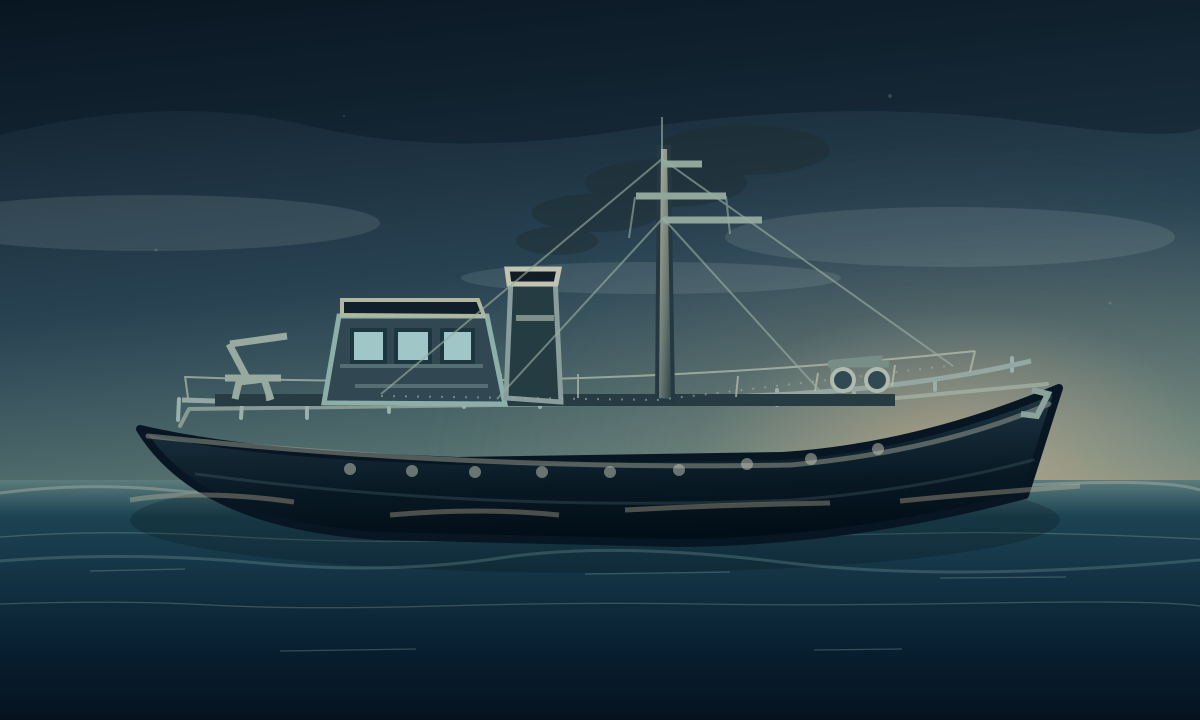
Garmo was a Grimsby steam trawler later taken into Royal Navy service. The ship shown above is a period-inspired illustration, not an authenticated plan of Garmo.
 THE WRECK EXPLORERDISCOVER WHAT LIES BENEATH
The sea kept her wreck.
History remembers her crew.
THE DECEMBER 1914 MINEFIELD
Four days after the German raid on the Yorkshire coast, the danger remained at sea. Garmo — a Grimsby fishing trawler taken into naval service — was lost on a mine off Scarborough. The story that followed was one of courage, rescue and loss.
A German naval raid struck Scarborough, Whitby and Hartlepool. Mines laid offshore would keep endangering vessels after the attack itself had ended.
Historical interpretation based on published naval accounts. See sources and research notes.
While Garmo was almost vertical in the water, a boat from HM Drifter Principal went alongside to rescue a man.
Sub-Lieutenant W. L. Scott was later commended for this dangerous rescue. The vessel overturned and sank shortly afterwards.
ACCOUNT SUMMARISED FROM THE OFFICIAL MINESWEEPING DESPATCHONE SHIP. TWO WORLDS.
In 1914, she sailed on the North Sea. Today, her remaining structure lies on the seabed. Move the divider to reveal our artistic interpretation of both chapters.
EXAMINE REPORTED WRECK FEATURES ↘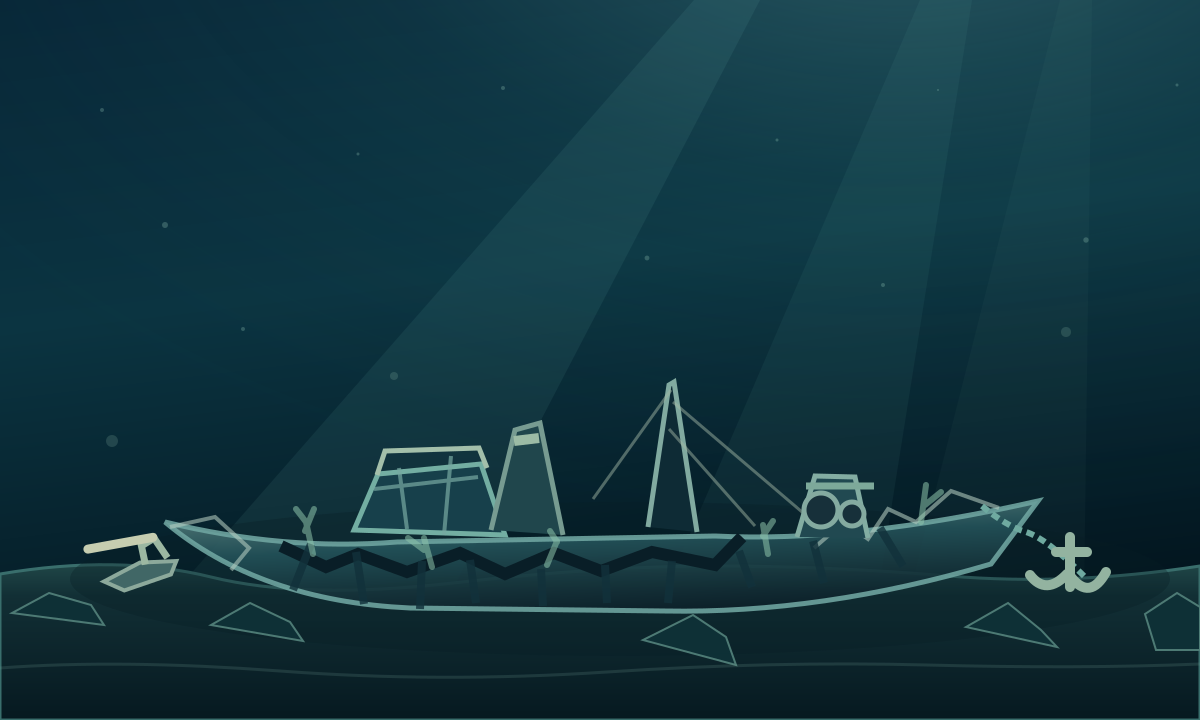
Garmo was a Grimsby steam trawler later taken into Royal Navy service. The ship shown above is a period-inspired illustration, not an authenticated plan of Garmo.
Four days after the East Coast raid, Garmo hit a mine. HM Drifter Principal went to her aid. Six crew members ultimately lost their lives.
READ THE SINKING ACCOUNT ↗Divers report a stern partly buried in silt, a displaced gun near the stern and an anchor winch towards the bow. Their positions here are schematic.
THEN & NOW DIAGRAM ↗About this reconstruction: Both scenes are original digital illustrations created to tell the story. They are not historic photographs, scans, photogrammetry, surveyed positions or a claim that the vessel looked exactly as drawn. We will refine them as verified photographs and survey information become available.
INTERPRETIVE WRECK STUDY
This exploratory diagram brings together reported underwater features: a stern partly in silt, a displaced gun and the anchor-winching area towards the bow. Select a feature to learn more.
Divers describe a gun lying separately on the seabed near the stern. Its position in this drawing is illustrative, not a measured location.
What this diagram is — and isn't. An interpretive illustration based on local diver observations supplied to The Wreck Explorer. Orientation, scale, feature identification and relative positions are not independently surveyed. Not for navigation or dive planning.
Five crewmen were lost in the sinking. Skipper Thaddeus Gilbert died of his injuries afterwards. Their names deserve to be remembered alongside the history of the vessel.
IN MEMORY · 20 DECEMBER 1914Research note: the Royal Navy casualty list records Joseph W. Thornton, while a separate local-history account names him James Thornton. This difference remains under review; the memorial follows the naval casualty list.
IMAGES / RESEARCH / LIVING MEMORY
Every underwater photograph, dive sketch or original document can help rebuild this story. The archive is being prepared for credited community contributions.
Watch Garmo footage shared by Dave Herbi on YouTube.
WATCH THE VIDEO ↗Real dive images and credited historic photographs are coming in a later release.
CURATION IN PROGRESSOur first interpretive 3D explorer is ready to try. Future versions will be refined with verified photography and surveys.
EXPLORE 3D DEEP SCAN ↗When submissions open, we'll be asking for original dive photos, sketches, documents and information — with clear contributor credit and permission.
OUR SOURCES
We separate historical accounts from contemporary diver observations. If new evidence changes the picture, the archive should change too.
HISTORICAL EDITION · NOT A NAUTICAL CHART. Publicly listed positions may disagree and have not been independently surveyed by The Wreck Explorer. No imagery on this page is presented as a verified underwater photograph of Garmo.
Five distinct reconstructed scenes tell the story of Garmo’s loss and rescue, with research notes alongside the film.
WATCH THE DOCUMENTARY ↗